
Ultrasonic Cleaning
Ultrasonic Cleaning
Ultrasonic cleaning uses high-frequency vibrations to loosen and remove deposits, and it shows up in dentistry in two main ways: ultrasonic scalers that clean teeth, and ultrasonic baths that clean instruments. This page explains how both work, where they fit alongside routine dental care, and what you can ask our team at Sam’s Smile Dental in Humble, TX.
What ultrasonic Cleaning is
Ultrasonic cleaning relies on sound waves pitched above the range of human hearing. In a dental office, that energy is put to work in two different ways.
- Ultrasonic scalers — a handheld tool with a slim tip that vibrates very quickly. The vibration helps break up plaque and hardened tartar (calculus) on tooth surfaces, while a stream of water cools the tip and flushes debris away.
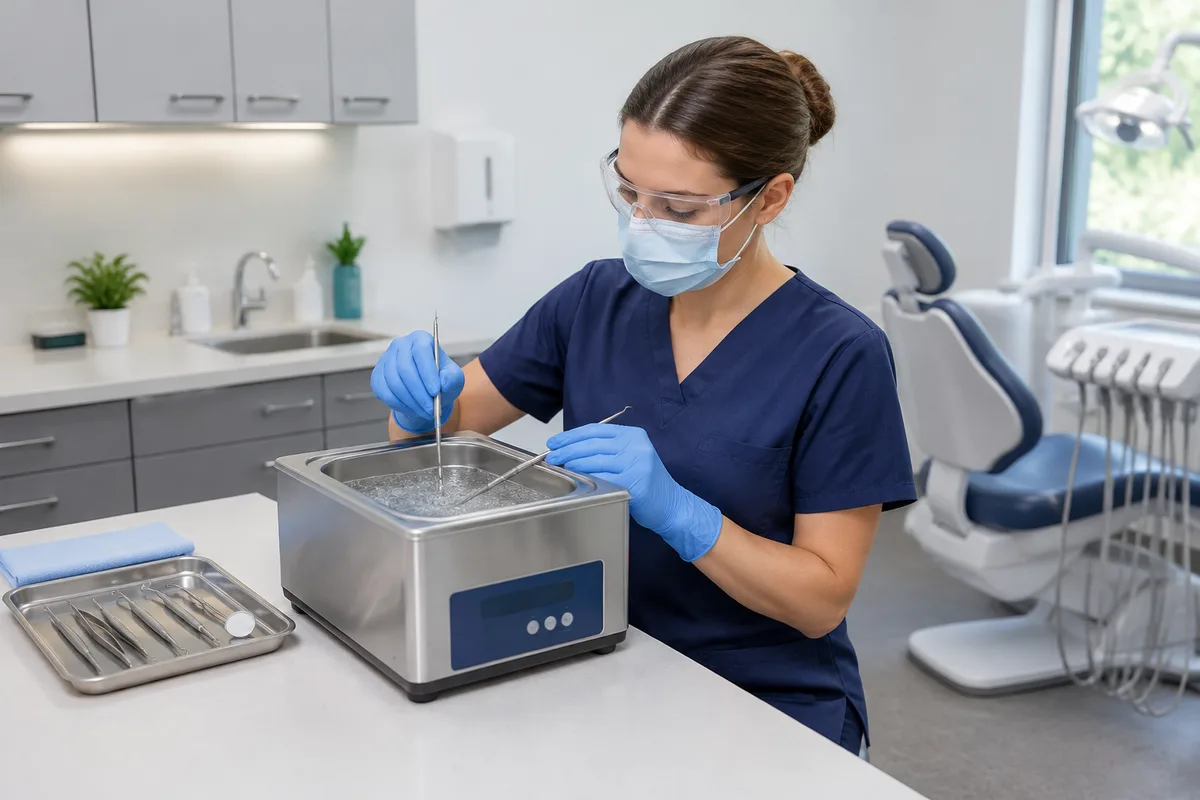
- Ultrasonic instrument baths — a tank of cleaning solution in which sound waves create microscopic bubbles. The bubbles dislodge debris from the grooves and hinges of reusable instruments, which are then sterilized as a separate step.
Before ultrasonic scalers, cleanings were done mostly by hand with metal scraping instruments. Hand scaling is still used and still valuable, but ultrasonic tips can remove larger deposits with less manual force. In the same way, scrubbing instruments by hand has largely given way to ultrasonic baths, which reach small crevices that a brush can miss.
How we use it at Sam’s Smile Dental
Our listed services include Dental Cleaning and Scaling & Root Planing, the two kinds of care where ultrasonic scaling is most often involved. Our dental hygienists are the team members whose credentials cover this kind of preventive and periodontal cleaning work.
We don’t want to overstate specifics here. Which tools are used for your visit depends on your mouth: how much buildup there is, how your gums look, and what your clinician recommends. If you’re curious whether an ultrasonic scaler will be part of your cleaning, or how our team cleans its instruments, just ask. We’re glad to explain.
Cleaning is also one part of a bigger picture. Other technology in our office, such as Digital X-Rays and Intraoral Cameras, serves a different purpose: helping us see problems early. A cleaning keeps surfaces healthy, while diagnostic tools help us see what needs attention.
What it means for you
Whether it is the scaler or the instrument bath, the general benefits of ultrasonic technology are easy to understand.
- Thorough removal of buildup — the vibration helps loosen tartar that daily brushing and flossing can’t remove once it hardens.
- Gentler on your time — because the tip does much of the loosening, less hand scraping may be needed for some patients.
- Help for gum health — removing deposits near and just below the gumline supports healthier gums, which is the goal of deeper cleanings such as scaling and root planing.
- Cleaner instruments — ultrasonic baths remove debris from hard-to-reach spots before sterilization, which supports a safe environment.
Keep in mind that ultrasonic cleaning is a tool, not a substitute for good home care. Brushing, flossing, and regular dental visits remain the foundation of a healthy mouth.
What to expect during your visit
Before your cleaning, your hygienist will usually review your health history and ask about any sensitivity or concerns. You don’t need special preparation, though brushing beforehand can make you feel more comfortable. Let the team know about anything that affects your care, such as a pacemaker or other implanted device, since some patients are advised to avoid certain ultrasonic equipment.
During the cleaning, if an ultrasonic scaler is used, you’ll hear a light humming or whistling sound and feel gentle vibration and a cool spray of water. Your mouth will be suctioned as the work goes on. Many people find the sensation unusual rather than uncomfortable, though sensitive teeth or inflamed gums can make some areas feel more noticeable. Tell your hygienist if anything bothers you, and ask about options for staying comfortable.
Afterward, teeth often feel smooth and clean. Gums may be slightly tender for a day or so if there was significant buildup. Your hygienist can talk with you about home care and when to return. Appointment length varies with the type of cleaning and your needs, so ask our team what to plan for.
Frequently asked questions
Is ultrasonic cleaning safe?
Ultrasonic scalers are a widely used, long-established part of professional dental cleanings when operated by trained clinicians. The water spray keeps the tip cool and washes away debris. Tell your hygienist about your health history, including any implanted medical devices, so they can choose the right approach.
Does it hurt?
Most people feel vibration, water, and some pressure rather than pain. Teeth with sensitivity or gums that are inflamed from heavy buildup may feel more tender. If you have any discomfort, speak up so your hygienist can adjust their technique or discuss comfort options.
How long does it take, and how often is it used?
The time depends on how much buildup you have and whether you’re having a routine cleaning or a deeper treatment such as scaling and root planing. Ultrasonic tools are often used along with hand instruments rather than instead of them. Ask our team how they plan your visit and how often you should come in.
Who is it suitable for?
Many adults and older children who need tartar and plaque removed are good candidates. Some people, such as those with certain implanted devices or specific health conditions, may need a different method. Your clinician will decide what is appropriate after reviewing your history and examining your mouth.
If you’d like to learn more about ultrasonic cleaning or schedule a cleaning, get in touch with Sam’s Smile Dental. We’re happy to answer your questions and explain what to expect.
This content is for general information only and isn't dental or medical advice. Talk with your dentist or orthodontist about your own situation. If you have a medical emergency, call 911.