
Laser Dentistry
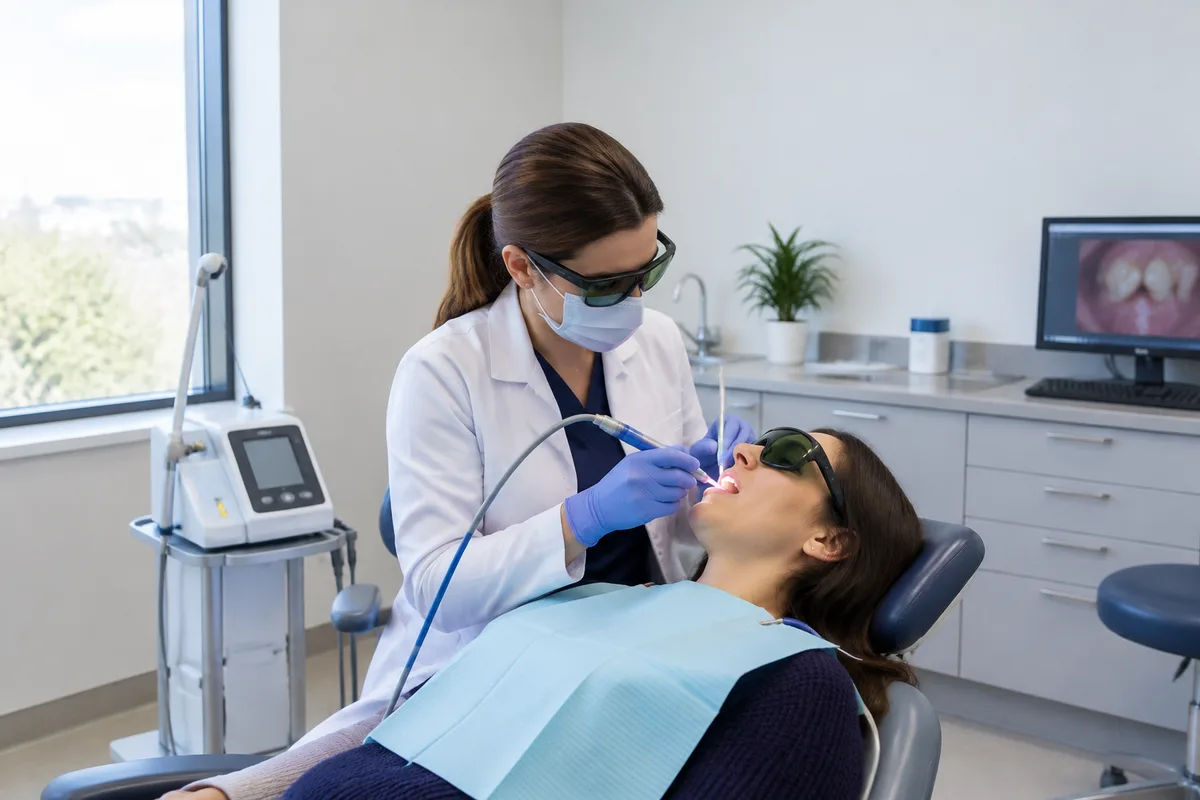
Laser Dentistry
Laser dentistry uses a focused beam of light energy to treat teeth and gums. At Sam’s Smile Dental in Humble, laser dentistry is one of our on-site facilities. It potentially offers a more comfortable option for a number of procedures involving hard or soft tissue, compared with drills and other non-laser tools.
What laser Dentistry is
A dental laser is an instrument that produces a narrow, concentrated beam of light. Depending on the type of laser and how it is set, that energy can be used to reshape gum tissue, remove decayed material from a tooth, or help prepare an area for treatment. The dentist controls where the beam is directed and how much energy is delivered.
Before lasers, these tasks were usually done with a scalpel for soft tissue and a rotary drill for teeth. Those tools are still widely used and still have an important place in dentistry. A laser offers another way to do some of the same work, often with less vibration and less noise than a drill. How well a laser fits depends on the procedure and on the patient’s needs.
Lasers are generally grouped by the tissue they work on:
- Soft tissue procedures — work on the gums, such as reshaping gum lines or treating gum problems.
- Hard tissue procedures — work on tooth structure, such as preparing a tooth for a filling.
How we use it at Sam’s Smile Dental
Laser dentistry is part of the equipment available in our office, and it sits alongside other technology we offer on site, including Cone Beam imaging and Isolite. Each of these has its own purpose. Cone Beam creates three-dimensional images. Isolite is designed to support efficient appointments and patient comfort and safety.
Among our services, laser use is most clearly connected to Laser Gum Treatment, and it may also be relevant to other procedures involving gum or tooth tissue, such as composite fillings. Whether a laser is the right tool for you depends on your situation, and our dental team can explain the options that apply to your care.
What it means for you
For many patients, the appeal of a laser is comfort. Drills produce vibration and a high-pitched sound that some people find stressful, and a laser can reduce both. Patients who feel anxious about dental work sometimes find that a quieter approach makes the visit easier.
Other general benefits of laser dentistry include:
- Precision — the beam can be directed at a small, specific area, which helps the dentist work on the targeted tissue.
- Gentler soft tissue work — laser treatment of gums may involve less cutting than traditional methods.
- Less noise and vibration — some procedures can be done without the sound of a drill.
Results vary from person to person and from procedure to procedure, so laser dentistry should be seen as one useful option rather than a guarantee of any particular experience.
What to expect during your visit
Before treatment, your dentist will review your health history, look at the area of concern, and talk with you about which approach makes sense. This is a good time to ask questions about the laser, how it will be used, and whether any numbing is recommended for your procedure. Ask our team if there is anything you should do to prepare.
During treatment, you and the dental team will usually wear protective eyewear, because laser light needs to be handled with care. The dentist directs the beam at the treatment area. Many people notice a quieter experience than with a drill, though what you feel depends on the procedure and the tissue being treated. Let the team know right away if you feel uncomfortable.
Afterward, your dentist will explain any care instructions for the area. Gum tissue may feel a little tender as it settles, and your dentist can tell you what to expect for your specific treatment. The length of a visit depends on what is being done, so it is worth asking about timing when you schedule.
Frequently asked questions
Is laser dentistry safe?
Dental lasers are established tools when used by trained professionals following proper precautions. Protective eyewear is worn, and the beam is aimed only at the area being treated. If you have a health condition or are pregnant, tell your dentist so they can decide what is appropriate.
Does laser dentistry hurt?
Laser dentistry potentially offers a more comfortable option than drills for some procedures, but comfort varies from person to person. Some treatments may still call for numbing, depending on the area and the type of work. Tell the team about any concerns beforehand so they can discuss options with you.
How long does a laser procedure take?
The time depends on the procedure, not on the laser alone. A small area of gum tissue will take a different amount of time than a larger treatment. Our team can give you a better idea once they know what you need.
Who is laser dentistry suitable for?
Many adults may be candidates for laser treatment, but it is not right for every situation or every procedure. Some conditions are still best treated with traditional instruments. Your dentist will examine you and recommend the approach that fits your needs.
If you are curious about laser dentistry or wondering whether it could be part of your care, we invite you to book a visit or get in touch with Sam’s Smile Dental and ask our team.
This content is for general information only and isn't dental or medical advice. Talk with your dentist or orthodontist about your own situation. If you have a medical emergency, call 911.