
Digital X-Rays
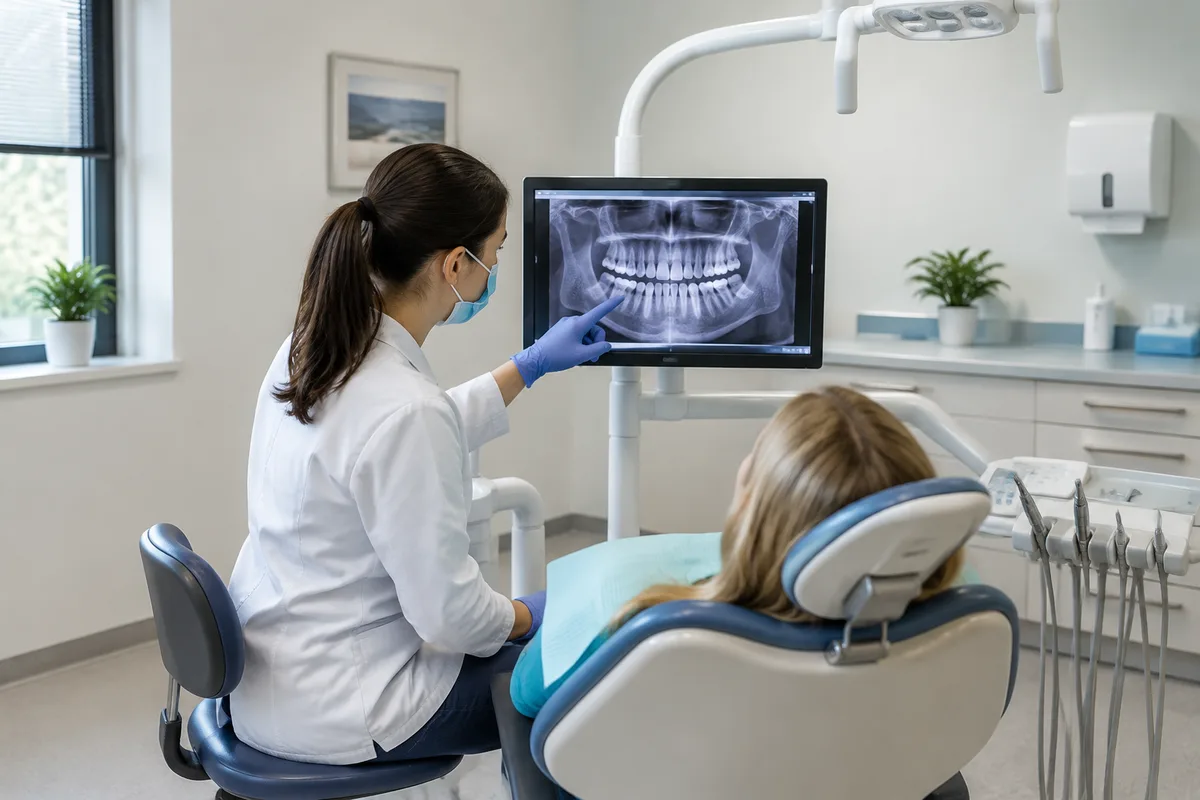
Digital X-Rays
Digital X-rays are a way of capturing images of your teeth, roots, and the bone around them using an electronic sensor instead of traditional film. At Sam’s Smile Dental, imaging is part of how we look beneath the surface of your smile. This page explains how digital X-rays work, how they fit into dental care, and what to expect when you have them taken.
What digital X-Rays is
A dental X-ray uses a very small amount of radiation to create a picture of structures your dentist cannot see by looking in your mouth. Dense materials such as enamel, fillings, and bone absorb more of the beam and appear lighter. Softer areas and early decay appear darker.
Traditional X-rays were recorded on film that had to be developed in chemicals before anyone could read it. Digital X-rays replace the film with a small electronic sensor. The image appears on a computer screen within moments, where it can be enlarged, brightened, or adjusted for contrast.
Digital imaging is generally known for these improvements over film:
- Immediate images — no waiting for film to develop.
- Lower radiation — digital sensors generally need less exposure than film.
- Easier viewing — images can be zoomed and adjusted to show detail.
- Digital records — images are stored electronically and can be compared over time.
How we use it at Sam’s Smile Dental
X-rays help a dentist see what a visual exam alone cannot, such as decay between teeth, infection at the root, bone levels around teeth, and the position of teeth that have not yet come in. That makes them useful across many of the services we offer, including exams and cleanings, fillings, crowns, root canal therapy, tooth extraction, and dental implants.
Digital X-rays are one part of a wider set of diagnostic tools here. Our Cone Beam technology (CBCT) creates three-dimensional images, which gives a fuller picture when a flat image is not enough. Each tool shows something different, and together they help build a clearer view of your oral health.
Which images you need depends on your own situation, and your dentist makes that decision. Ask our team which images are recommended for you and why.
What it means for you
For patients, the main advantages of digital imaging are practical ones.
- Less radiation — digital sensors generally require a lower dose than film.
- Clearer explanations — seeing your own image on a screen makes it easier to understand what your dentist is describing.
- Earlier detection — problems found while they are small are often simpler to treat.
- Less waiting — because images appear right away, they can be reviewed during your appointment.
- Better comparison — stored images let your dentist look for changes from one visit to the next.
Having clear images also helps you take part in decisions about your care. You can see the area of concern and ask questions about it.
What to expect during your visit
Before. There is little to prepare. Tell the team if you are or might be pregnant, and mention any concerns about X-rays. If you have had images taken at another dental office, let us know, as they can sometimes be useful for comparison.
During. You will be seated comfortably, and a protective covering may be placed over you. A small sensor is positioned in your mouth, and you bite gently or hold still for a moment while the image is taken. The sensor may feel a little awkward against your gums or the roof of your mouth, but the exposure itself takes only a moment and you will not feel the X-ray. Several images may be taken from different angles.
After. The images appear on a screen, and your dentist can review them with you and explain what they show. There is no recovery time, and you can go about your day as usual.
Frequently asked questions
Are digital X-rays safe?
Dental X-rays use a very low dose of radiation, and digital sensors generally need less than film. Protective measures and careful positioning further limit exposure. If you have questions about your own situation, your dentist can explain why an image is recommended.
Do digital X-rays hurt?
No, the X-ray itself cannot be felt. Some people find the sensor slightly bulky or uncomfortable to hold in place, especially with a sensitive gag reflex. Let the team know, and they can adjust positioning to help.
How long does it take, and how often are they needed?
Taking the images usually takes only a few minutes, and the pictures show on screen right away. How often you need them depends on your age, your dental history, and your current oral health, so your dentist will recommend a schedule for you.
Who are digital X-rays suitable for?
Digital X-rays are used for children, teens, and adults. Anyone who is or may be pregnant should tell the team before any imaging so your dentist can decide what is appropriate.
If you would like to know more about digital X-rays or how imaging fits into your care, book a visit with Sam’s Smile Dental or get in touch with our team.
This content is for general information only and isn't dental or medical advice. Talk with your dentist or orthodontist about your own situation. If you have a medical emergency, call 911.